New Leadership Transition for Editorial Services
Our Editorial Services department will experience a transition next month. Bruce Barron, who has managed nearly 300 editing assignments (including numerous books and dissertations) for our members since the Society’s launch in 2019, is stepping down as director. Dr. Jeff Foster and Dr. Loraine Hitt will take over as co-directors. Bruce will continue to serve as copyeditor for works in the humanities and social sciences, so if you’ve valued his editing, you should still have access to his assistance.
Loraine Hitt (Ed.D., Durham University) is a freelance education researcher and evaluator interested in how metacognitive training and mentoring improve learning. Loraine has taught English as a second language and academic writing in the US and the UAE, and she is the primary caregiver for her three sons, Samuel, Caleb, and Joel. Loraine lives with her husband, Dr. Wes Hitt, in South Carolina, USA.
Jeff Foster (Ph.D., Southeastern Baptist Theological Seminary) has served as Acquisitions Editor for the Society of Christian Scholars since 2019. Jeff has taught Old Testament and Hebrew in the US, and lives with his wife Deborah and four daughters in North Carolina, USA.
Over the coming months, we will be looking for additional editors and subject matter experts, especially in the physical sciences, to assist in this important service to Society members. If you might be interested in helping, please contact jfoster@societyofchristianscholars.org.
Upcoming Opportunities
The Spiritual Formation Group, led by Dr. Nita Kotiuga, meets on the second Wednesday of every month. The next meeting, on Wednesday, 8 July at 1400 UTC, will continue to explore various forms of experiencing God together through prayer. Have your Bible readily accessible as well as pen and paper, because writing notes by hand slows us down and helps us express more accurately how we feel. If you have any questions, please contact Dr. Kotiuga at nita.kotiuga@bgu.edu.
Society Library
The Library Reading Group will meet on Friday, 3 July at 1400 UTC. Led by Dr. Ferdinand Manjewa M’bwangi, we will discuss Excerpts from a Journal article submitted for publication “A Johannine spatial theology of life, light and love as counter-space: Calling Christian scholarship to counter violence against older persons in hostile African environments.” Be sure to register to attend the group. Should you have any questions, contact Dr Marlene Hines, the Society Librarian, at mhines@societyofchristianscholars.org.
Calling all book reviewers! If you would like to write a 1,000-word review of one of the following books for the Society, reach out to the Society’s book review editor, Dr Ron Lindo (rlindo@societyofchristianscholars.org) and he will make sure you receive a copy of the book for review.
1. Elmer John Thiessen, Healthy Christian Minds: A Biblical, Practical, and Sometimes Philosophical Exploration of Intellectual Virtues and Vices (Cascade Books, 2024)
This book focuses on how our intellect ought to be used for the spiritual development of godly virtues, not simply for the sake of processing more information.
2. Todd Korpi, AI Goes to Church: Pastoral Wisdom for Artificial Intelligence (InterVarsity Press, 2025)
In this book, Korpi wants to explain how the integration of AI into modern society can be useful to pastors and church leaders. Korpi examines how AI should be filtered through five main aspects of the Christian life: (1) its theological implications, (2) its ethical applications, (3) its practical applications, (4) how it might be used missionally, and (5) how it might be used hopefully.
3. Joel Carpenter, Perry L. Glanzer, and Nicholas S. Lantinga, eds. Christian Higher Education: A Global Reconnaissance (Eerdmans, 2014)
This book overviews the development of Christian practices in higher education across the globe. Locations covered include Kenya, China, Korea, India, Western Europe, Communist Europe, Mexico, Brazil, Canada, and the United States.
4. Beth Snodderly and Daniel W. O’Neill, eds. All Creation Groans: Toward a Theology of Disease and Global Health (Pickwick Publications, 2021)
Back cover summary: In a suffering world reeling from global pandemics and health disparities, it is high time to think theologically about the devastating experience of disease, and to address our God-inspired responsibility to understand its origins and engage in its management. In a fragmented world, we need a unifying and integrated perspective on people in communities embedded in a fractured ecology. In an academic world blind to the spiritual world and imbalanced toward technical solutions, the global church must articulate a contemporary metanarrative that is moral, practical, and deeply transformational.
5. Angela Reitsma Bick and Peter Schuurman, Blessed Are the Undone: Testimonies of the Quiet Deconstruction of Faith in Canada (New Leaf Press, 2024)
Back cover summary: Weaving in church history, cultural analysis, and their personal stories, Bick and Schuurman use canoe camping to illustrate the twists and turns of the spiritual journey. Whether you feel like you’re up the creek without a paddle when it comes to faith, or if people you love have lost their bearings, this book is for you. This book neither condemns nor condones the trend of those deconstructing their faith. It seeks to describe and document the Canadian “deconstructing faith” scene while also providing a theological and sociological frame through which to understand it. Provocative, critical, fair, and focused on Canadian concerns, this book opens a window of well-researched appraisal.
This month’s Library Reading Corner feature includes an annotated bibliography of five library resources under the library categories: Pursuing Vocational Excellence, Interacting with Cultures, Theology and Academy, and Engaging Unbelief.
These resources provide further reading for the May 2026 webinar by Prof. Damaris Seleina Parsitau, Finding God in the Machine or Forming Themselves?
1. Title: Engaging the Custodians of Tradition and Culture: Leveraging the Role of Multiple Actors in Maasai Girls’ Education by Damaris Seleina Parsitau
Brief Description: This policy brief presents findings of a research study on issues and challenges relating to educational opportunities for women and girls of Maasailand, Kenya.
2. The Role of Faith and Faith-Based Organizations Among Internationally Displaced Persons in Kenya by Damaris Seleina Parsitau
Brief Description: This article reports on ethnographic research conducted among four faith-based organizations in Nakuru and Nairobi and also a group of Internally Displaced Persons in a Mai Mahui IDP camp in Kenya. The research examined the role of the church and faith-based organizations in integrating IDPs, who are mainly political refugees, into their new environment.
3. Artificial Intelligence and Patriarchal Readings of Religious Texts: Assessing Bias and Opportunities for Gender-Inclusive Interpretation by Uzoma Amos Dike
Brief Description: This paper describes research on whether AI models reinforce traditional male-dominated biblical interpretation or facilitate gender-inclusive reinterpretations. The findings may contribute to a critical understanding of AI’s impact on gender discourse within religious studies and its broader ethical implications for gender equality in the digital age.
4. African Christian Theology in the Age of AI: Machine Intelligence and Theology in Africa by Yogesh Awasthi and George Okumu Achar
Brief Description: This paper explores the intersection of theology and AI in the context of the study and practice of theology, examining the implications and possibilities of using machine intelligence to enhance spiritual guidance and support in Africa.
5. AI and the Bible by Jim Lloyd
Brief Description: In this video recording, the presenter acknowledges AI’s benefits but focuses on the limits and negative features of AI software applications in biblical studies for academic purposes or when used as a spiritual guide or resource.
Upcoming Webinar
Be sure to check the Webinars Page for third-party webinars that are often added on short notice and for updated presenters and topics that may be helpful in equipping you to bring the gospel to bear in your university context.
Christian Mentoring in the University: What is it and how can the Society of Christian Scholars help provide it? — Saturday, 4 July 2026 at 17:00 UTC
This short webinar is designed for scholars who want to know more about how a mentoring relationship with another Christian scholar in their field can equip them for growth and service in their campus context. The Society of Christian Scholars has facilitated mentoring relationships for several years already, but we are trying to deepen and widen the program, and one of the things many of you have told us is that you need to know more about what Christian mentoring is and how to do it. The webinar will answer some of your questions by featuring a series of short testimonies from Christian scholars around the world. It will also report on what we’ve learned so far from our survey on mentoring needs and opportunities. For questions, email Stephen Ney evenstay@gmail.com.
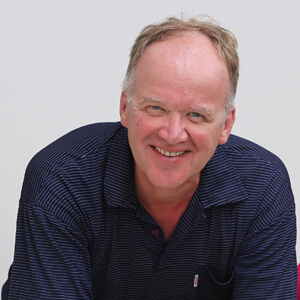
The Free Society: Its Enemies and Friends by Prof. Dr. Ralf B. Bergmann — Thursday, 16 July 2026 at 1400 UTC
Today’s public square in western societies is increasingly governed by highly moralized debates that often demand conformity to deeply amoral claims. These circumstances are made possible by a dominance of emotion over rationality or what Karl Popper identifies as a ‘revolt against reason’. Neither truth nor the argument is evaluated; rather, the person who brings the argument forward is judged. As such, public discussion becomes confined to a narrow spectrum of acceptable opinions.
On 16 July 2026 at 1400 UTC, Prof. Dr Ralf B. Bergmann, Professor of Physics at the University of Bremen, will trace the ideological roots of this attack on freedom of thought that has created a great deal of polarization in many societies. He affirms that as Christians we have the resources to strengthen freedom and stability of a society, based on Jesus’ saying, ‘The truth will set you free’. Being this kind of salt for a whole society requires regaining intellectual, cultural, and social leadership, both on an individual as well as a societal level. His presentation is based on his 2021 book, Die freie Gesellschaft und ihre Feinde, which is a nod to Karl Popper’s work, The Open Society and Its Enemies.
Prof. Dr. Ralf B. Bergmann has been involved in semiconductor physics and technology, photovoltaics and optical technologies at several research institutions in Germany and Australia and has also worked in industrial research. Since 2008, he is a Professor at the University of Bremen as well as head of a research institute and works on optical technologies and optoelectronics. Beyond his research, he is defending the rationality and relevance of Christian faith, with respect to the joint concerns of physics, philosophy, and theology as well as modern western society and has published a number of resources along these lines e.g. ‘Can we overcome a polarized society?‘ or ‘God and the explanation of the world‘.
Disclaimer: The views and opinions expressed in the Addenda are those of the authors and do not necessarily reflect the views or positions of the Society of Christian Scholars.