When Christian Scholars Gather as One, New Possibilities Emerge
By Stephen M. Garrett
The upcoming August, Global Leadership Conference in Nairobi, Kenya feels especially meaningful as we gather around a theme that speaks directly to who we are becoming together as a Society: Christian Scholarship for a Flourishing World — Calling, Connection, and Community. It’s a theme that doesn’t just frame the event; it reflects the ethos of our global fellowship and the commitments we share across continents, disciplines, and cultures.
One of the most encouraging signs of that shared commitment came through the paper proposal process. We received 100 proposals from scholars around the world — a response that left our team both humbled and energised. Reading through them, we could feel the intellectual passion, the spiritual depth, and the sheer diversity of voices that make our community what it is.
Submissions came from theologians and biblical scholars (38%), those in the humanities (33%), scientists and engineers (20%), and social scientists (9%). And the global spread was remarkable: 64% of proposals came from Africa (48% from Anglophone Africa and 16% from Francophone Africa), with strong representation from Europe (8%), North America (15%), Latin America (5%), and Southeast Asia (8%). Seeing those numbers reminded us again that the Society is becoming a truly global platform for Christian scholarship.
Our evaluation team — Jesudas Athyal, Martine Barons, Luka Dinshak, Sebastian Rivas, Peter Schuurman, and Alexander Timothy — spent weeks reading, discussing, and discerning. From those 100 proposals, 36 papers were selected based on five rigorous criteria, assessing conference fit, themed content, structure, readability, and academic rigour.
The final group reflects a rich mix of disciplines (Humanities: 37%, Theology/Biblical Studies: 25%, Social Sciences: 22%, STEM/Sciences: 16%), a meaningful representation by women (67% / 33%, male to female ratio), and a strong, geographic dispersion with 61% from Africa (Anglophone: 50%; Francophone: 11%), 8% from Europe, 17% from North America, 6% from Latin America, and 8% from South East Asia. While we hope to achieve greater representation of the multitudes that will one day sing ‘Holy, Holy, Holy is the Lord God Almighty’ (Isa 6:3; Rev 4:8), we trust it is indicative of a rich tapestry of scholarship that is growing not only in size but in depth, breadth, and influence.
These 36 papers, along with the plenary addresses, now anchor our three conference working groups: Calling, Connection, and Community. Each group brings together scholars wrestling with shared questions — from navigating vocation in difficult contexts, to engaging emerging technologies with wisdom, to cultivating friendship and collegiality in academic life. Together, they embody our hope for this conference: that it will strengthen a global network of Christian scholars whose work is rigorous, faithful, and oriented toward the flourishing of the world.
Dr. Richard Smith’s Book, Such a Mind as This: A Biblical-Theological Study of Thinking in the Old Testament, is now available in Español
Tras una larga espera y mucha preparación, la versión en español de mi libro (Such a Mind as This: A Biblical-Theological Study of Thinking in the Old Testament) ya está disponible. El nuevo título es Amar a Dios con la Mente: Lecciones desde el Antiguo Testamento. Por favor, recomiéndenlo a sus amigos latinos en Norteamérica que tengan acceso a Amazon para obtener una copia impresa.
Upcoming Opportunities
Next Spiritual Formation Meeting
The Spiritual Formation Group, led by Dr. Nita Kotiuga, continues to meet on the second Wednesday of every month. The next meeting, on Wednesday, 10 June 2026 at 1400 UTC, will continue to explore various forms of experiencing God together through prayer.
Be sure to have your Bible readily accessible as well as pen and paper, because handwriting slows us down to help us express more accurately how we feel. If you have any questions, please feel free to contact Dr. Kotiuga at nita.kotiuga@bgu.edu.
Society Library
The Library Reading Group will meet on Friday, 5 June at 1400 UTC. Led by Dr. Richard Middleton, we will discuss the chapter “Islands in the Sun: Overtures to a Caribbean Creation Theology” in Middleton’s book, A Kairos Moment for Caribbean Theology: Ecumenical Voices in Dialogue. Should you have any questions, contact Dr Marlene Hines, the Society Librarian, at mhines@societyofchristianscholars.org.
This month’s Library Reading Corner feature includes an annotated bibliography of five library resources under the library categories of Pursuing Vocational Excellence and Theology and Academy. These resources provide further reading for the April 2026 webinar, ‘Christian Contribution to Modern India’, by Dr. Joshua Kalapati.
1. The Oxford Encyclopedia and South Asian Christianity: Critical Review edited by Roger E. Eglund, Jesudas Athyal, Joshua Kalapati, Jessica Richards & Mylapore
Brief Description: This review of the Oxford Encyclopaedia of South Asian Christianity details how the OESAC provides an historical account of Christianity and the church in the Indian subcontinent and the neighboring countries of Afghanistan, Burma and the island nations of Sri Lanka and the Maldives.
2. The Early Educational Mission of the Scottish Missionaries in Madras Presidency: Its Social Implications by Joshua Kalapati
Brief Description: This paper discusses the role of Scottish missionaries during the period of Indian colonialism and how their efforts shaped the present-day Christian society in South India, its impact on the fall and re-emergence of Hinduism, and the social reform of Indian society through Christian higher education and Christian journalism.
3. The Impact and Challenges of Asian Christianity in a Pluralistic Setting: A Biblical Approach to Changing the Situation by Aftab Yunis Hakim
Brief Description: The main challenge to Christianity’s growth and its influence on Asian societies is religious pluralism and diversity. The article explores ways in which these challenges may be overcome and assesses the credibility of previous efforts to deal with the issues.
4. Title: Introduction: Missionary Movement and the Coming of Christianity to Southern Asia by Robbie B. H. Goh
Brief Description: This introductory chapter of the book Christianity in Southeast Asia provides an overview of the contribution of Catholic and Protestant missionary efforts to the social transformation of Southeast Asian countries as Christianity was introduced to these countries between the 16th and 19th centuries.
5. The Social Impact of Missionary Higher Education by Robert D. Woodberry
Brief Description: This book chapter in Woodberry’s Christian Responses to Asian Challenges: A Globalisation View on Christian Higher Education in East Asia focuses on the significant contribution of Protestant Christian missionaries in educating the population of East Asia.
Upcoming Webinar
Be sure to check the Webinars Page for third-party webinars that are often added on short notice and for updated presenters and topics that may be helpful in equipping you to bring the gospel to bear in your university context.
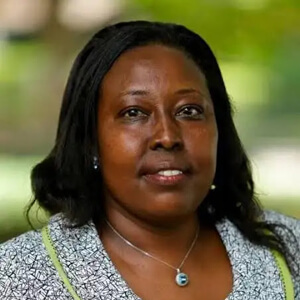
Finding God in the Machine or Forming Themselves? Young Kenyan Women’s Spiritual Formation in the Age of AI by Damaris Seleina Parsitau — Thursday, 21 May 2026 at 1400 UTC
AI is rapidly reconfiguring religious authority, spiritual formation, and theological imagination across Africa. What does wisdom look like when faith is formed within algorithm ecologies? How might African Christianity speak into global conversations about AI, authority, and the future of spiritual formation on a continent undergoing such rapid reconfiguration?
On Thursday, 21 May 2026 at 1400 UTC, Prof. Damaris Seleina Parsitau will examine how young Kenyan women are quietly yet consequentially reshaping African Christianity through AI-enabled digital platforms. Rather than treating them as passive consumers of technological change, she argues that they are active theological agents: curating devotional content, reinterpreting Scripture, hosting prayer networks, building online faith communities, navigating mental health and belonging, and holding church-and-state entanglements to account. By foregrounding African women’s digital religious creativity, Parsitau posits that any serious global conversation about AI and the future of faith must reckon with voices from the margins, where the machine meets the Spirit in ways neither Silicon Valley nor the institutional church has fully anticipated.
Prof. Damaris Parsitau is an Associate Professor of World Christianity and Gender Studies and is currently based at Calvin University (Grand Rapids, USA), where she serves as director of the Nagel Institute for the Study of World Christianity. She has taught extensively at universities in Kenya, South Africa, and the United States, including Harvard University and Calvin University. In addition to her appointment at Calvin, Prof. Parsitau is a Professor at Daystar University, Kenya, and holds the title of Professor Extraordinaire at both the University of South Africa and the University of the Western Cape. Alongside her roles in university executive leadership, research institutes, and policy institutions, for over three decades Professor Parsitau has maintained a sustained and active research profile, with significant scholarly publications and postgraduate supervision throughout her career.
Disclaimer: The views and opinions expressed in the Addenda are those of the authors and do not necessarily reflect the views or positions of the Society of Christian Scholars.