Are there any connections between ancient Daoist texts and the Bible that may serve as a bridge to communicate the gospel of Christ and foster wisdom and understanding of human being in a Chinese context?
On Thursday, 15 October 20206 at 14000 UTC, Dr Andrew Yan will explore three foundational themes shared by Daoist and Christian traditions: ultimate reality, spiritual practice, and human destiny. Structured around the progression of Dao → Non-Action (Wuwei) → Immortality and Logos/God → Grace → Eternal Life, it examines both parallels and differences between classical Daoist texts and the Bible.
The first section compares the Dao of the Daodejing with the Logos of the Gospel of John as principles of cosmic origin and order. The second considers the Daoist ideal of wuwei alongside biblical teachings on grace, surrender, and life in God, highlighting their shared critique of ego-driven striving. The third explores Daoist notions of immortality and Christian understandings of resurrection and eternal life. Finally, the talk reflects on the Daoist sage and the Christian saint as parallel models of transformed humanity. Rather than conflating the two traditions, the presentation seeks to foster a deeper dialogue concerning wisdom, spiritual transformation, and humanity’s ultimate destiny.
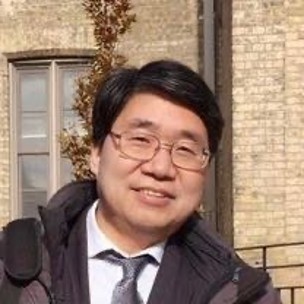
Dr Andrew (Zhonghu) Yan is a scholar of comparative philosophy and religion, holding advanced degrees from Brown University (M.A.) and the University of Toronto (Ph.D.). He is the author of the pioneering work An Existential Reading of the Confucian Analects (Cambria Press, 2011), which opened new avenues for dialogue between Confucian thought and existential theology. Dr Yan is also a sought-after speaker, known for his insightful explorations of the intersections between Daoist and Christian traditions. He currently teaches Chinese philosophy at the University of Toronto and serves as an instructor at the Canadian Chinese School of Theology at Tyndale University.